
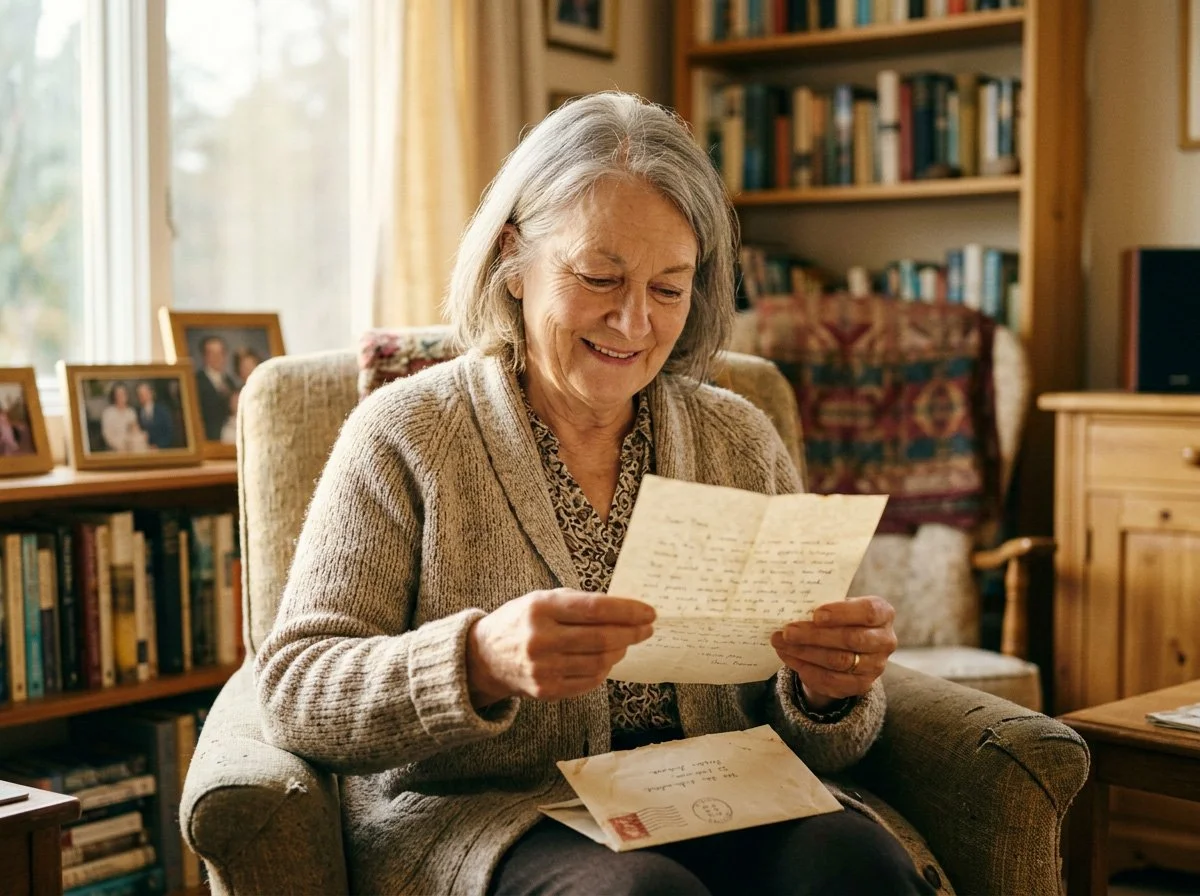
Dementia takes a great deal from a person, but it doesn't take everything, and it doesn't take it all at once. Understanding what remains is the key to understanding why storytelling and reminiscence can be so valuable for someone living with the condition. Long after recent conversations have become hard to hold onto, the memories of a life lived decades ago often stay vivid and reachable. Working with those memories, rather than mourning the ones that have faded, opens up real moments of connection and comfort.
Why old memories stay when new ones slip away
In many forms of dementia, short-term memory is affected earlier and more severely than long-term memory. Someone may not recall what they had for breakfast but can describe their childhood street in rich detail, sing every word of a song from their youth, or light up talking about the job they held for forty years.
This is why reminiscence works so well. Instead of asking a person to do the very thing the illness has made hardest, which is to form and hold new memories, it invites them into territory where they still feel capable and at home. Talking about the distant past can be one of the few conversations where a person with dementia feels fluent, confident and fully themselves. That experience of competence is precious when so much of daily life has started to feel confusing.
Reminiscence as a source of calm
Reminiscence therapy, which uses photographs, music, familiar objects and life stories to prompt memories, has become a well-established part of good dementia care. Families and carers often notice that it brings a visible calm. Someone who has been agitated or withdrawn can soften and brighten when a favourite old song plays or a familiar photograph appears.
Part of the reason is emotional grounding. Dementia can make the present feel unfamiliar and unsettling, which naturally causes distress. Reconnecting with well-worn memories offers a sense of safety and orientation, a return to something the person knows deeply. It isn't a treatment that changes the course of the illness, but for wellbeing in the moment, these connections can matter enormously.
A gentle note is worth adding here. Not every memory is a comfortable one, and for some people certain topics can bring sadness or distress rather than calm. Good reminiscence follows the person's lead, stays with what brings them joy, and gently steps away from anything that upsets them.
Seeing the person, not just the condition
The dementia care pioneer Tom Kitwood spent his career arguing that people with dementia are, first and always, people. He worried that care systems too often reduced individuals to their diagnosis, treating the illness and losing sight of the human being living with it. He called the antidote personhood: recognising and upholding who someone truly is.
Storytelling is one of the most direct ways to honour personhood. A life story reminds everyone in the room that this is a whole human being with a history, achievements, loves and a personality that existed long before the diagnosis. That person was a nurse, a father, a keen gardener, a wicked card player. Keeping that identity visible changes how a person is treated, and people are remarkably sensitive to being seen as themselves rather than as a patient.
A bridge for families and carers
Dementia can be isolating for families as much as for the person living with it. Conversations grow harder. Visits can feel strained when nobody quite knows what to talk about, and loved ones grieve the person while they are still here.
A recorded life story gives everyone something to hold onto and something to share. It becomes a bridge back to connection. Sitting together and listening to Dad describe his younger years, or looking through a story built around old photographs, gives a family a way to be together that feels warm rather than awkward. Carers who know a person's history can connect far more easily too. Knowing that a resident once worked on the railways or raised four children gives them real ways in, real things to talk about, and a fuller sense of who they're caring for.
Capturing the story while there's time
There's a gentle urgency to storytelling in the context of dementia. The window to capture someone's memories in their own words does narrow over time. Recording a person's story earlier in their journey means preserving their voice, their humour and their perspective while they can still share them fully. It's a gift to the family and, done with care, a meaningful and enjoyable experience for the person themselves.
At We Are Bound, we approach this work gently and at each person's pace, following what brings them comfort and joy. Dementia changes a great deal, but the value of a life and the pleasure of sharing it remain. Helping people hold onto their story, and helping their families hold onto them, is some of the most worthwhile work there is.
If you are reaching out about a loved one living with dementia, please know that Narelle is experienced in this area and happy to speak privately before any commitment is made.