
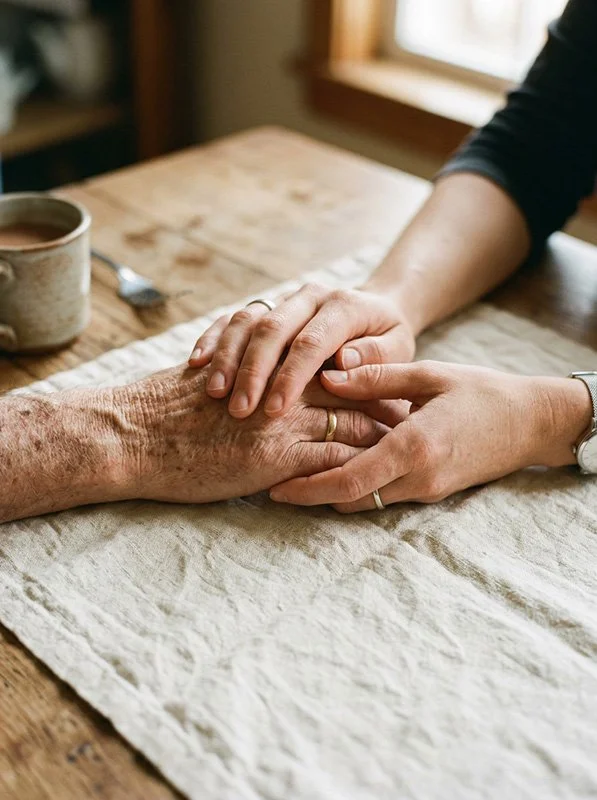
There's a quiet question that sits underneath a long life. Did it count? Did the years, the work, the sacrifices, the small daily acts of love actually mean something? Most people never say it out loud. But as life moves into its later chapters, the need to feel that the answer is yes grows stronger.
Validating someone's life story is how we help them reach that yes. It's one of the most meaningful things we can offer another person, and it's easy to underestimate how much it matters until you see the effect it has.
The final task of a life
The psychologist Erik Erikson mapped out the human life as a series of stages, each with its own central challenge. He believed the last of these, in older age, came down to a choice between what he called integrity and despair.
Integrity, in his sense, is the feeling of looking back over your life and being able to accept it as it was. Not perfect, not free of regret, but whole. Yours. A life that made sense and was worth living. Despair is the opposite: reaching the end still feeling that it was wasted, or that it added up to nothing, with no time left to fix it.
Erikson saw this as the real psychological work of later life. And crucially, it isn't something people always manage alone. Reaching integrity is far easier when someone else helps you see your life clearly and reflects its worth back to you. That reflecting-back is what validation does.
Being witnessed is different from being remembered
We often talk about preserving stories so they aren't forgotten. That matters. But validation is about something happening in the present moment, for the person who is still here.
When you sit with someone and truly listen to their story, and when you respond in a way that shows you understand what it cost them and what it meant, you are witnessing their life. You're telling them their experience was real, and that it registered with another human being. For someone who has spent years feeling that the world has stopped paying attention, being witnessed like this can be profoundly moving.
There's a meaningful difference between being tolerated and being valued. A lot of older people are cared for kindly but rarely made to feel genuinely valued. Their opinions aren't sought. Their history isn't asked about. Validation closes that gap. It moves someone from feeling like a person things are done for to feeling like a person who matters.
Recording a story is an act of validation in itself
Here's something worth sitting with. The simple decision to record someone's story carries a message before a single word is spoken.
Choosing to preserve a person's life says: your story is worth the time, the effort and the care of keeping. It's a declaration of value. People understand this instinctively. When a family says "we want to capture your story properly," the person on the other end hears something deeper than the request. They hear that they are important to the people they love, and that their life is seen as a treasure rather than a set of details that will quietly disappear.
That message alone can shift how a person feels about themselves in their final years.
Validation isn't the same as agreement
It's worth being clear about what validation means, because it's easy to confuse with flattery. Validating a life story doesn't mean pretending everything in it was admirable, or telling someone only what they want to hear. Real lives contain mistakes and regrets, and honest storytelling includes them.
To validate a story is to accept the whole of it as real and as meaningful, difficult parts included. It's saying: this was your life, and all of it counts. Often the most healing moment comes not from praising someone's successes but from acknowledging their struggles. Recognising how hard something was, and that they carried it, can matter more than any compliment.
The relief of feeling seen
When people feel their life story has been genuinely received and honoured, something visibly settles in them. There's a lightness, sometimes even tears, and often a kind of gratitude that's hard to put into words. It's the relief of no longer having to wonder whether any of it mattered. Someone has confirmed that it did.
That relief is the heart of why validation matters so much. It answers the quiet question a long life asks. It lets a person put their story down knowing it was heard, held and valued.
At We Are Bound, this is what we care about most. Preserving the words is important, but the deeper work is making sure that while someone is here, they feel the full weight of how much their life has mattered. Everyone deserves to reach the end of their story feeling that it counted.