
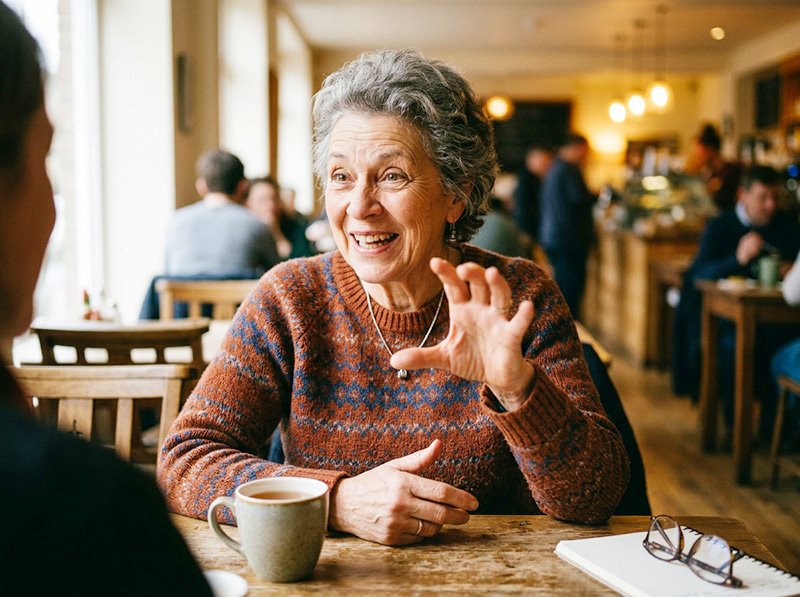
We tend to think of storytelling as something we do for other people. We record an older relative's memories so the grandchildren will have them, or so the history isn't lost. That's a good enough reason on its own. But it overlooks something important: the act of telling a life story does a great deal of good for the person doing the telling.
For older people, and particularly for those in care or managing illness, being asked to share their story can be genuinely therapeutic. It isn't just a pleasant way to pass an afternoon. There's real psychology behind why it helps, and it's worth understanding.
Looking back is a healthy thing to do
In the 1960s, the psychiatrist Robert Butler described something he called "life review." He noticed that older people often feel a natural pull to look back over their lives, to sort through what happened and make sense of it. For a long time this was dismissed as dwelling or living in the past. Butler argued the opposite. He saw it as normal, necessary psychological work: the mind organising a lifetime into something coherent and meaningful.
Storytelling gives that instinct a shape and a purpose. Rather than looping over regrets alone, an older person telling their story to an attentive listener gets to walk through their life in order, notice the through-lines, and put difficult chapters in context. Studies of reminiscence and life-review work with older adults have repeatedly linked it to lower rates of depression and improved mood. Turning a jumble of memories into a story that hangs together brings a real sense of peace.
Being heard is its own medicine
One of the hardest parts of growing older is the quiet feeling of becoming invisible. Retirement removes a role. Friends pass away. Adult children get busy. In residential care, days can pass where nobody asks a resident anything beyond whether they've taken their tablets or what they'd like for lunch.
Sitting down to record someone's story reverses that completely. It says, without needing to say it aloud: your life is interesting, your memories are worth keeping, and I want to hear them. For someone who has started to feel overlooked, that message lands deeply. The attention itself is restorative. People sit taller when they realise that what they know and what they've lived through still holds value to someone.
It brings purpose back into focus
Purpose doesn't retire when we do, but it can get harder to find. Telling a life story gives an older person a genuine project and a role that only they can fill. Nobody else can tell their story. They are the sole authority on it. That sense of being needed, of having something important to contribute, is a powerful antidote to the aimlessness that can settle in during later years.
Many people also find real motivation in the idea of leaving something behind. Knowing that their words will reach their grandchildren, or be there for family they won't get to meet, turns the whole exercise into a legacy worth completing. It gives the coming weeks a point.
It gently exercises the mind
Recalling the past is good work for the brain. Reaching back for names, dates, sequences and details keeps memory active and engaged. Storytelling also draws on language, concentration and emotional expression all at once, which makes it richer mental exercise than passive activities like watching television.
None of this is a cure for cognitive decline, and it shouldn't be sold as one. But keeping the mind engaged in something meaningful is good for wellbeing at any age, and telling a story a person cares about is far more motivating than any worksheet or puzzle designed to do the same job.
Old wounds can finally settle
Not every memory is a happy one. Most long lives contain loss, hardship, decisions a person still questions, and grief that was never fully spoken about. It might seem safer to steer around these, but the chance to tell them, out loud, to someone who listens without judgement, is often where the deepest relief comes from.
Naming a hard thing and having it received with respect can loosen a grip it's held for decades. People frequently reach a kind of acceptance while telling their story that they couldn't reach on their own. Saying "this happened, and I got through it, and here I am" is quietly powerful. It reframes a painful chapter as evidence of strength rather than something to carry in silence.
A conversation worth having
The wonderful thing about all of this is how simple it is. You don't need special training to give someone these benefits. You need to ask, and you need to listen properly.
At We Are Bound, we make that conversation easy to have and easy to keep. But whether you record it formally or just sit down with a cup of tea and a few good questions, giving an older person the chance to tell their story is one of the kindest and most restorative gifts you can offer.